Part One: What I Saw From the Sidewalk
1. I Broke Into Houses Like Yours. Here's Why I'm Writing This Down
Why you can trust what's in this book, and why the easy house is the one that gets picked.
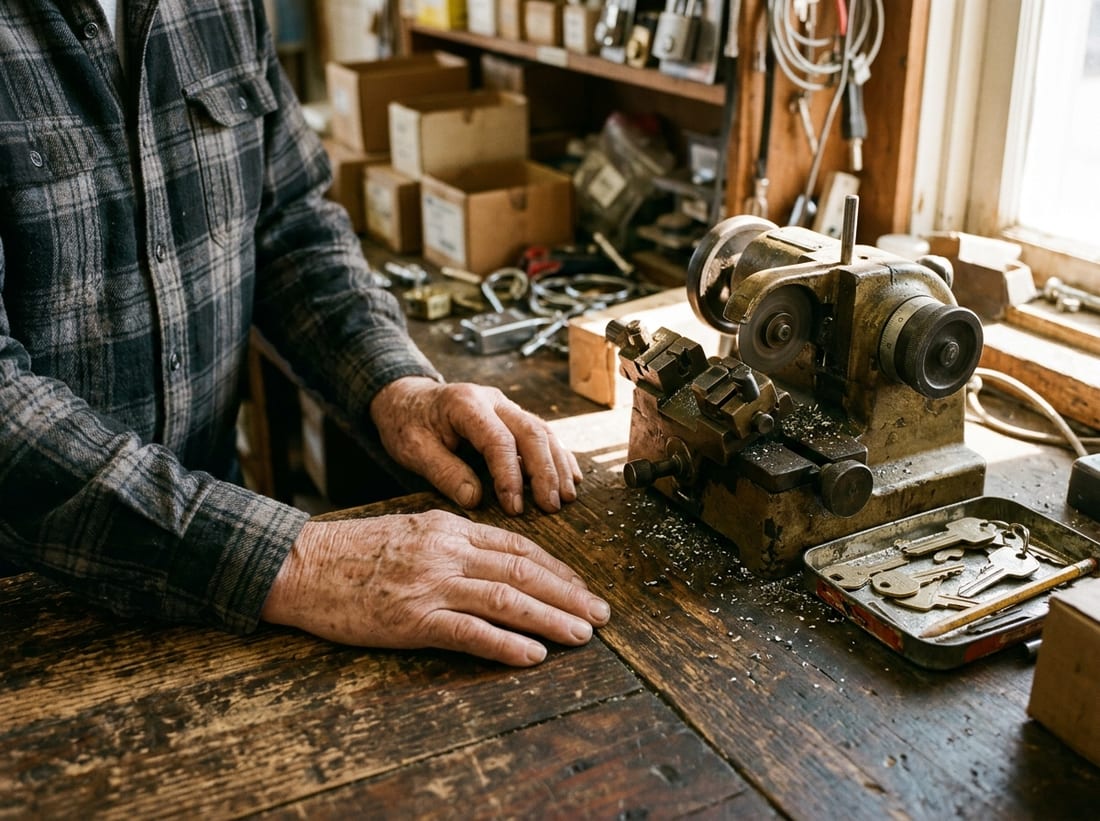
Thirty years I cut keys at this counter. I kept thinking about the ones I'd taken.
She was maybe seventy-five. Blue raincoat, purse held tight against her side. She set a deadbolt down on my counter at the hardware store and asked me one question.
"Will this keep them out?"
I'd been behind that counter about ten years by then. I gave her the answer a clerk gives. Check the door it's going on. Use the long screws. Follow the instructions in the box.
What I didn't tell her was how I knew. I knew because I used to be one of "them."
I went home that night and couldn't sleep. I kept thinking about all the women like her. They were buying locks because they were scared, and they never knew what really made a man like me walk past their house.
I worked that counter for thirty years. A lot of people asked me that same question. Every time, I thought about saying more.
So this book is me saying more.
It isn't a confession for my own sake. Some of what I did can't be fixed. But I spent years looking at houses the wrong way. I can't give back what I took. What I can do is tell you what I saw. I can tell you what made me pick one house, and more important, what made me pass one by.
Here's what used to stop me. If I can help you be that house, then some good comes out of all of it.
Part Two: The Knock and the Front Door
10. Your Door Frame and the Long Screws That Change Everything
A door is only as strong as the wood around the lock. Here's the few-dollar fix.
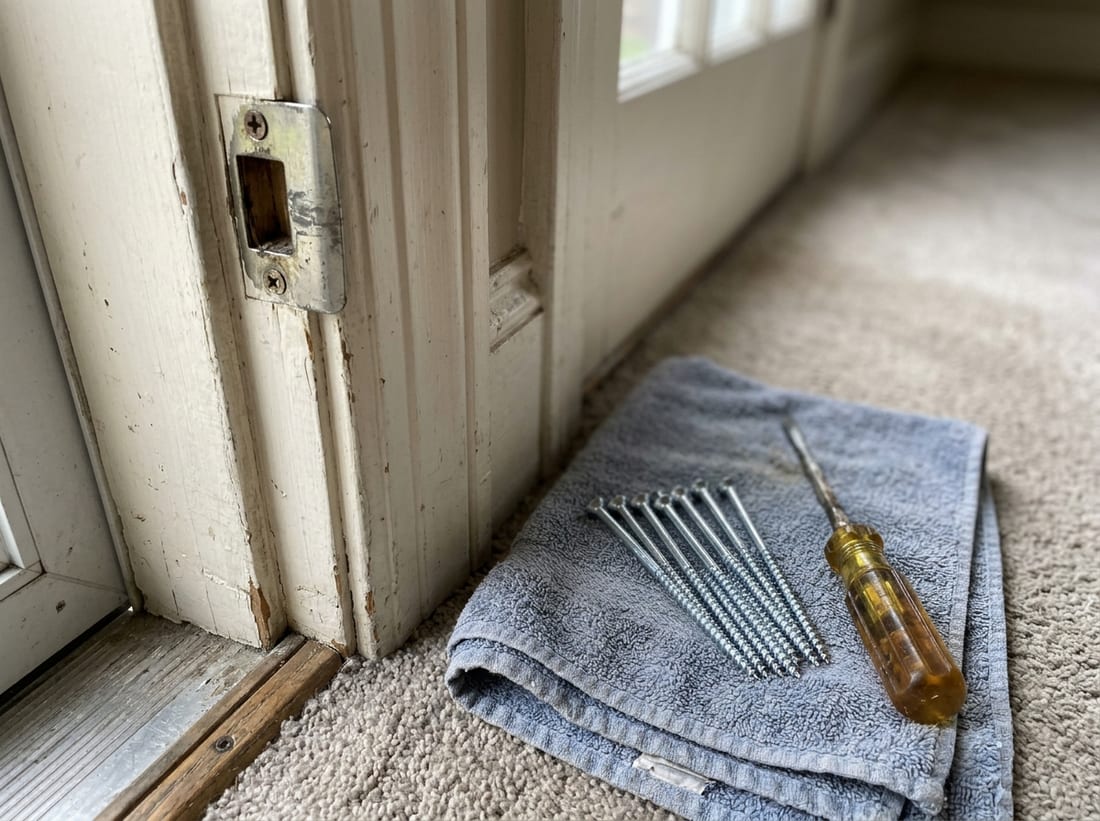
Two little screws held that door shut. Two long ones and fifteen minutes would have sent me on my way.
There was a house on a corner lot, back in '81. Nice brass deadbolt on the front door. Shiny. The kind somebody paid good money for and felt better about the day they put it in.
I didn't care about that lock. I never did. What I looked at was the wood around it.
I'm not proud of that. I'm telling you because I spent six years in a cell thinking about the people whose doors I went through. Most of them did the right thing and bought a good lock. Nobody ever told them the lock is only half the job.
Then I spent thirty years behind a hardware counter. I watched people buy expensive deadbolts and go home and screw them into the same tired wood with the same short little screws that came with the house.
You've probably done it too. You bought the good lock. Maybe your son-in-law put it in. You turn it every night and you hear that solid click and you sleep better.
That click matters. But here's what used to stop me, and it wasn't the click. It was a door frame that somebody had taken ten minutes to fix.
This chapter is about that ten minutes. It costs a few dollars. You don't need a ladder. And if you can't do it yourself, I'll tell you who can.
Part Three: Every Other Way In
14. Sliding Glass Doors: A Wooden Dowel and Some Common Sense
The cheapest fix in this book, for the door most folks forget to secure.
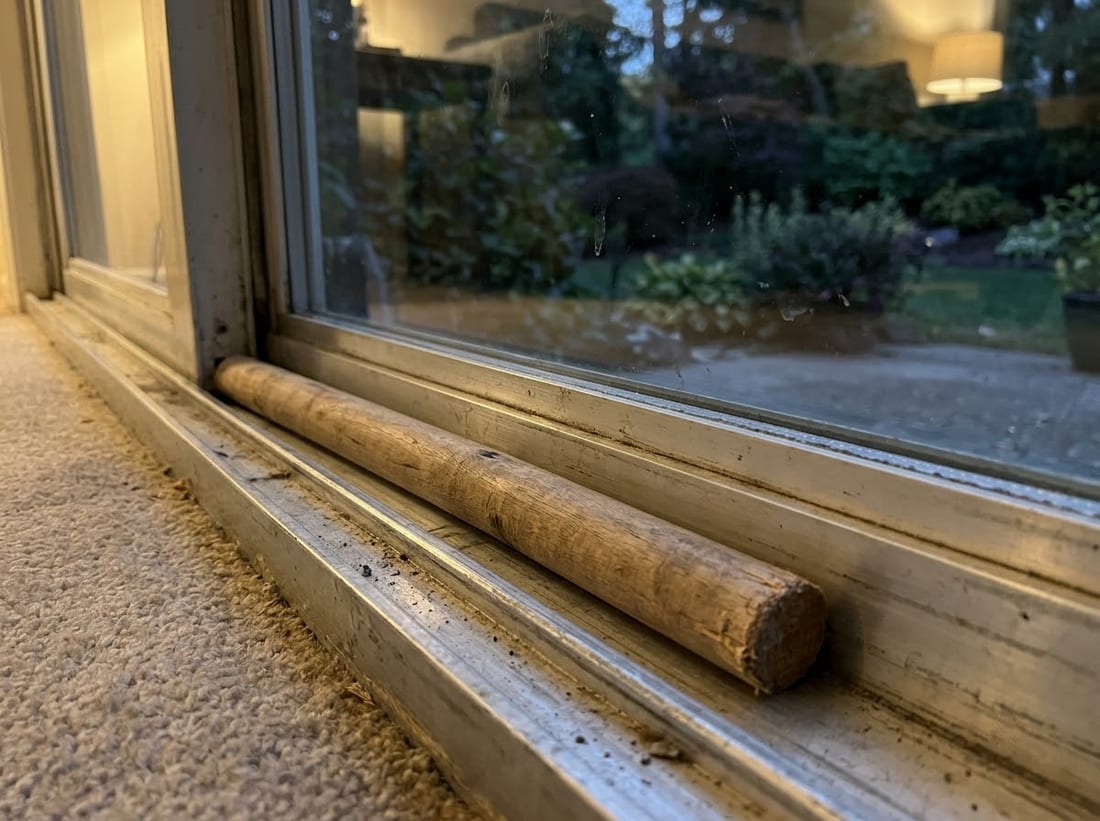
A few dollars of wood, cut at the counter. When I saw one of these in a track, I turned around and left.
You've probably already locked the front door tonight. Maybe you checked it twice. Most folks I know do.
But walk to the back of the house. Look at that big sliding glass door to the patio. When did you last check it? Not just look at it. Actually check it.
I'll tell you something I'm not proud of. In the late '70s and through the '80s, the front door wasn't where I spent my attention. The back of the house was. Nobody watches the back of a house. And a lot of those backs had a sliding glass door with nothing in the track and the curtains wide open.
There was a house in '81. Ranch style, nice yard, older woman living alone. From her back fence I could see her whole living room. Her purse sat on the chair by the slider. I won't say any more about that night. I think about her more than I'd like to. She did nothing wrong. Nobody had ever told her what I'm about to tell you.
Here's what used to stop me: a plain stick of wood lying in the bottom track. That's it. A few dollars. It told me somebody in that house was paying attention, and I moved on.
This is the cheapest fix in this whole book. Let's do it right.